SISLA: "THE LEGAL STATUS OF IMAGES IN AL-ANDALUS" Houari Touati, EHESS, Paris
Date: Wednesday, January 29th
Time: 6:30-8:30pm
Location: 4 Washington Square North, 2nd floor
RSVP here: https://forms.gle/y6nNNEq7eFJGgWWx7
*Since space is limited, it is essential to RSVP. If for any reason you have rsvp'd and cannot attend, please use the RSVP form to let us know.
Silsila: Center for Material Histories is an NYU center dedicated to material histories of the Islamicate world. Each semester we hold a thematic series of lectures and workshops, which are open to the public. Details of the Center can be found at:
http://as.nyu.edu/content/nyu-as/as/research-centers/silsila.html
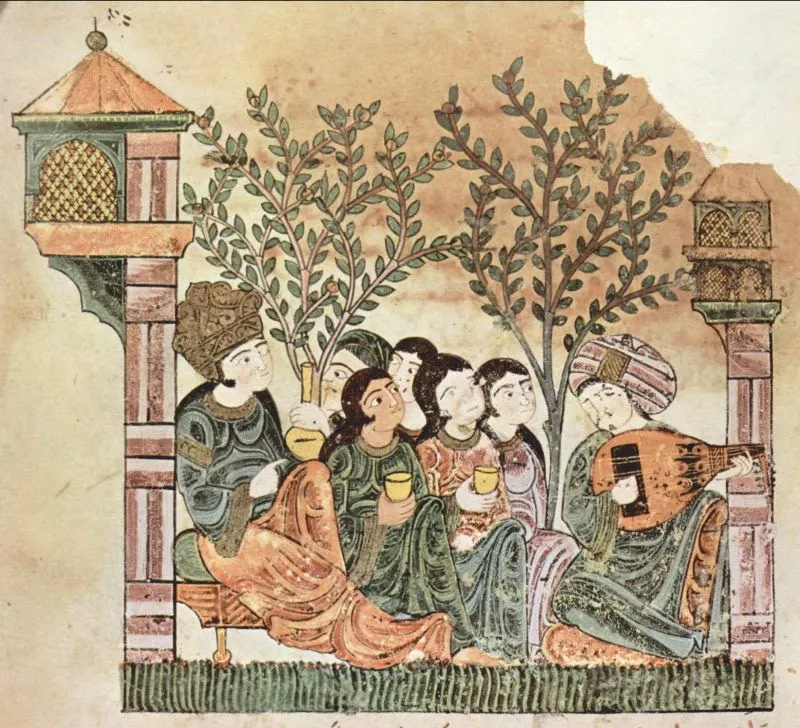
Classical Muslim jurists and traditionalists have certainly been preoccupied with figurative images, but they have never treated them in themselves as if they were self-sufficient. They have always discussed them incidentally when dealing with household furniture, clothing or even drinks. In the middle of the 11th century, an Andalusian jurist considered it necessary to gather all the legal solutions concerning them that had reached him. He made them in a collection that is the first of its kind. What interest did an Andalusian Mālikite jurist have in compiling such a collection, knowing that the legal school to which he belonged had nourished a relative but real hostility towards zoomorphic and anthropomorphic representations? What is the significance of this collection of legal exempla? What is so special about studying the attitudes of the Islamic legal institution towards images? To these questions (and others) the lecture proposes to provide answers.
Houari Touati is full professor at School of Advanced Studies in Social Sciences (EHESS, Paris) and director of the scholarly journal Studia Islamica. He is the author of many books, among them: L’Armoire à sagesse. Bibliothèques et collections en islam, Paris, Flammarion, 2003, Islam and Travel in the Middle Ages, University of Chicago Press, 2010, and Les origines tragiques de la culture islamique, Paris, Gallimard, NRF, 2020 (January).